Pest Control Social Media Marketing: A Guide for Busy Operators
Written by: Tim Eisenhauer
Last updated:
The easiest way to keep your social media profiles active.
Learn more about Apaya →
Nobody follows a pest control company for fun. That’s the objection every operator raises about social media, and it’s half right. Homeowners aren’t scrolling for termite content. But the day they find frass on a windowsill or hear scratching in the attic, they Google three companies, read the reviews, and glance at the profiles. That glance is what pest control social media marketing is for.
Pest control social media marketing means using Facebook, Instagram, and LinkedIn to show your work, teach homeowners what they’re looking at, and look unmistakably alive when a panicked prospect checks you out. In BrightLocal’s 2026 consumer survey, 24% of people said they check a local business’s social media after finding it on Google, and 93% said they favor businesses with positive reviews and an active presence. A profile with last week’s wasp-nest removal on it closes that check. A profile that’s been silent since spring fails it.
Key takeaways.
- Customers verify before they call: 24% check your social profiles after Googling you, and 93% favor an active presence with good reviews (BrightLocal, 2026).
- Your jobs are the content: wildlife exclusions, termite damage, the nest in the grill. Trades content pulls the highest Instagram engagement of any industry in Hootsuite’s data (4.40%).
- Facebook is where the panic-post happens: “anyone know a good exterminator?” gets asked in neighborhood groups every day, and your page is where those referrals land.
- Pest control has two selling seasons: spring insects and fall rodent exclusion, and social media is the cheapest way to book both before the phone rings.
- The cost range is enormous: DIY costs your evenings, freelancers run $500-3,000/month, agencies $1,500-5,000/month, and AI tools like Apaya start from $55/month billed annually.
Why pest control social media feels pointless (and why it isn’t).
Three objections, three straight answers.
“Nobody wants to see bugs on their feed.” Correct, and irrelevant. The audience isn’t following you for entertainment; they’re checking you at the moment of need. The job of the feed is proof of life and proof of competence for a stranger deciding which company enters their home. That said, people do love a good “what we found” post far more than operators expect. Watching a problem get solved is universally satisfying, and nobody’s problems are more viscerally satisfying to watch get solved than yours.
“I’m in crawlspaces all day, not at a desk.” The realest objection in any trade. A post takes 30-45 minutes by hand: pick a photo, write a caption, size the graphic, publish to each platform. That time doesn’t exist during ant season, which is exactly when the leads are searching. The fix isn’t discipline. It’s removing the production work, which is what Apaya for pest control companies does: the AI learns your services and service area from your website, writes the posts, designs branded graphics, and schedules everything. You review the queue and approve. Ten minutes a week, and the feed survives June.
“My techs’ photos are gross.” Some are. Those are often your best material. The distinction that matters is between gross-and-fascinating (the nest, the colony, the entry point) and gross-and-gratuitous. You’ll develop the eye fast, and half the list below needs no critters at all.
I covered the cross-trade version of this argument in AI social media for contractors; everything from here is pest-specific.
15 pest control social media post ideas.
Straight from jobs you already run. No content calendar invented in a conference room.
-
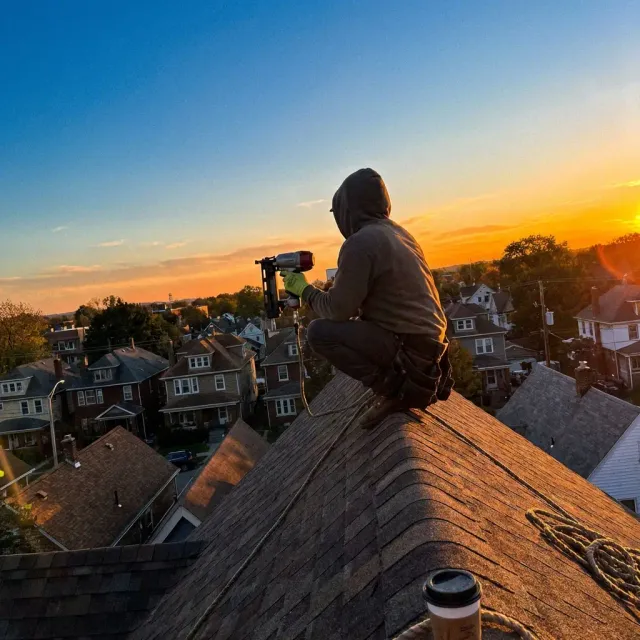
The “what we found” post. The wasp nest the size of a basketball. The ant colony behind the outlet. The thing in the grill. Highest-entertainment content you own, and it makes the case for professional work without a word of selling.
-
Termites vs carpenter ants. The single most valuable education post in the industry, because homeowners can’t tell them apart and the cost difference terrifies them. Two photos, four plain-English differences, “send us a photo if you’re not sure.” That last line generates leads directly.
-
The seasonal ant reminder. “It rained for a week and now they’re in your kitchen. Here’s why, and what not to spray.” Post it every spring. It will work every spring.
-
The fall exclusion push. “Mice are looking for a warm place to winter. Your garage qualifies.” September and October posts about rodent exclusion book the season before the scratching starts.
-
Entry-point education. A photo of a gap around a pipe penetration with a pencil for scale, and the line “a mouse needs the width of a dime.” Homeowners walk their own foundations after seeing this one, then call you about what they find.
-
The DIY-spray myth-buster. Why the hardware-store spray scatters the colony instead of killing it. Educational, true, and it dismantles your biggest competitor, which is the customer’s own optimism.
-
Pet-and-kid safety explainer. The question behind half your inbound calls. Explain your approach to treatment safety in plain language, once, publicly, and let it answer the phone for you.
-
The tech spotlight. Name, years in the field, the weirdest thing they’ve ever found. Your customers are letting a stranger into the crawlspace under their children’s bedrooms; showing the humans lowers that barrier more than any credential.
-
Before-and-after exclusion work. Chewed soffit vs sealed soffit. Open gap vs steel wool and sealant. Not glamorous, deeply reassuring.
-
The review repost. A five-star Google review as a clean branded graphic with one line of context. Social proof on a loop, zero new material.
-
The commercial save, for LinkedIn. “Quarterly service caught activity at this restaurant before an inspector or a customer did.” Property managers and facility directors read exactly this, and health-code stakes make pest control an easier commercial sell than almost any trade.
-
Bed bug travel tips. Seasonal (summer travel, college move-in), useful, shareable, and it positions you as the calm expert in the most anxiety-soaked corner of your industry.
-
The FAQ answer. “Why do I have ants in winter?” “Does one mouse mean an infestation?” “Do sonic repellers work?” Every question you answer ten times a week is a post that answers it around the clock.
-
The service-visit explainer. What a first inspection includes, how long it takes, what happens after. Demystifying the visit converts the fence-sitters who fear a sales ambush.
-
The wildlife release. If you do humane wildlife work, the raccoon-in-the-trap-headed-somewhere-better post is the most likeable content in your entire industry. Use it.
The pattern: you already have the photos, the questions, and the seasonal rhythm. The bottleneck is producing captions, graphics, and a schedule out of them every week, which is the part that’s automatable.
Which platform does what for pest control.
Facebook: the panic-and-referral platform. “Anyone know a good exterminator?” is asked in local groups daily, and the recommended company’s page gets checked within minutes. Post the education, the reviews, the seasonal reminders here. This is the platform that most directly turns into booked jobs.
Instagram: the proof-of-competence feed. The “what we found” content, exclusion before-and-afters, tech spotlights. Trades content earns a 4.40% average engagement rate here per Hootsuite’s industry data, the highest of any industry they track. The homeowner comparing three quotes looks here to see if you’re professional.
LinkedIn: the commercial channel. Restaurants, property management, warehouses, healthcare facilities. Compliance-driven, contract-based, recurring revenue. Post the commercial saves and inspection-readiness content. Residential-only operators can skip it without guilt.
TikTok: optional but unusually suited to you. Pest removal is one of the most-watched trade genres on short video. If someone on your team enjoys filming, the ceiling is high. If not, don’t manufacture it.
The two-season play.
Pest control revenue has two ignitions: spring insects and fall rodents. The mistake is starting to post when the season starts, which is when you’re too busy to post at all.
- 6 weeks before spring: ant and termite education, the swarm-season explainer, the DIY myth-buster. You’re planting the “call a pro” seed before the first trail appears.
- Spring peak: proof. Jobs, saves, response times. The trust file for everyone currently Googling.
- Late summer: bed bug and travel content, plus the first exclusion teasers.
- 6 weeks before fall: the rodent-exclusion push, entry-point education, “book before the scratching starts.”
- Winter: the quarterly-plan pitch, aimed at everyone who paid for an emergency call this year and would rather not repeat it.
That calendar has to be built in advance, because in-season you’ll be in an attic. Approve a season’s queue in one sitting; let it run while you work.
What pest control social media marketing costs.
| Option | Monthly cost | What you get | The catch |
|---|---|---|---|
| DIY | $0 + 4-8 hrs/week | Full control, authentic voice | The hours vanish every ant season, so it stops |
| Freelancer | $500-3,000 | A human managing 1-2 platforms | They can’t tell a termite from an ant, and it shows in the captions |
| Agency | $1,500-5,000 | Strategy, content, reporting | Priced for franchise budgets, not owner-operators |
| AI (Apaya) | From $55/month billed annually | Posts written, graphics designed, scheduled across 6 platforms; you review and approve | It needs your job photos, and you still do the approving |
The AI row is mine, so hold it to the same scrutiny as the rest. Apaya learns your business from your website, produces the posts and graphics, and publishes on schedule to Instagram, Facebook, LinkedIn, X, TikTok, and Pinterest. What it doesn’t do: run unattended. You approve the queue, you supply the job photos that make it yours, and you answer the DMs, because a DM is a customer holding a dead bug and their patience.
Frequently asked questions.
What is the best advertising for pest control services?
Google Search and Local Services Ads capture the emergency (“exterminator near me, now”). Social media wins the verification step that follows: 24% of consumers check your profiles before choosing. The cheapest effective stack for a small operator is a well-run Google Business Profile, steady reviews, and an active Facebook and Instagram presence, with paid boosts on seasonal pushes.
What should pest control companies post on social media?
Education (termites vs ants, entry points, DIY myths), proof (“what we found,” exclusion before-and-afters, reviews), people (tech spotlights), and seasonal pushes (spring insects, fall rodents). The 15 ideas above cover a full year from jobs you’re already running.
Which social media platform is best for pest control?
Facebook first, because neighborhood-group referrals land there. Instagram second for visual proof. LinkedIn only if you want commercial contracts. TikTok is optional upside if someone on the team likes filming.
How often should a pest control company post?
Two to four times a week, sustained through your busy season, beats daily posting that dies in June. Benchmark data across industries shows peak engagement at roughly two posts per week; consistency is the entire game.
Is social media worth it for a small pest control company?
At the right cost, yes. If it takes $2,000 a month or your evenings, the math is ugly. If it takes an approval queue and your techs’ photos, it’s the cheapest credibility you can buy, and every post is a permanent proof point that you show up and solve the problem.
Post the nest photo.
Your techs’ camera rolls are full of proof that you solve problems people desperately want solved. Put it where the next panicked homeowner will look. Start your free trial — Try it for 3 days • $0 today • Cancel anytime. Connect your website, review what the AI writes about your business, and let the queue survive ant season without you.
The easiest way to keep your social media profiles active.
Apaya writes the posts, designs the graphics, and publishes them for you. You approve.
See how Apaya worksThe easiest way to keep your social media profiles active.
Apaya writes your posts, designs your graphics, and publishes everywhere — automatically.